
Vice-Dean for Studies and Student-Related Services
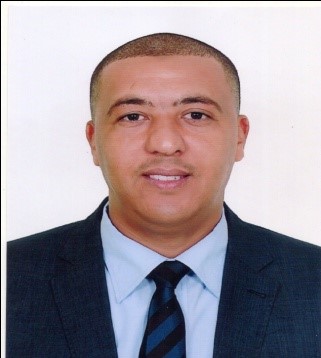
Vice-Dean for Studies and Student-Related Services
- Vice-Dean in charge of Studies & Student-Related Affairs: P. Mohamed Faraoun
- Email: mohamed.faraoun@univ-sba.dz
- The Pedagogical Staff
Pedagogical Duties of the Vice-Dean in charge of Studies and Student Affairs
Ensure the management and follow-up of undergraduate student registrations.
Monitor the progress of teaching activities and take or propose any measures to improve them.
Maintain the nominal and statistical list of students.
Supervise the work of the teaching/training team.
Collect, process, and disseminate pedagogical information for the benefit of students.
Authenticate academic certificates.
The Vice-Dean in charge of Studies and Student Affairs is assisted in his duties by:
Teaching Department:
Monitoring requests for academic leave and suspension of studies.
Following up on the disciplinary status of faculty students.
Supervising student registrations.
Issuing final graduation certificates for Master’s and Bachelor’s students.
Monitoring and reviewing the pedagogical database of faculty students.
Monitoring and reviewing the pedagogical database of graduating students.
Following up on the status of international students within the faculty.
Preparing the final report of graduating students at the faculty level.
Authenticating academic certificates.
Follow-up and Evaluation Department:
Reviewing monthly pedagogical reports and minutes submitted by heads of departments and program coordinators.
Submitting comprehensive monthly reports on the conduct of pedagogical activities in all faculty departments, and highlighting certain pedagogical issues to the Vice-Rector for Higher Education in Undergraduate Studies, Continuing Education, and Degrees.
Ensuring compliance with regulatory and pedagogical decisions and instructions issued by the Vice-Rectorate for Higher Education.
Proper preparation of all types of examinations and monitoring their conduct.
Preparing, in collaboration with department heads, student information and orientation days, such as open-door events on the LMD system, programs, and specializations, in order to guide new baccalaureate students.
Statistics, Information, Orientation, and “PROGRES” Department of the Faculty:
Monitoring and reviewing the student database (National Service File) of the faculty.
Compiling statistics on the number of enrolled and graduating students, by specialization.
Supervising the faculty’s statistics.
Overseeing the registration process of new baccalaureate holders.
Supervising university transfer procedures.
Monitoring and reviewing the National Service File database of faculty students.
Reviewing and verifying the conformity of programs (modules, courses, coefficients, and credits) with the approved training curricula for all levels and specializations.
Issuing student ID cards and school certificates in case of loss or damage.
Certificates Office / Certificates and Equivalency Office:
Reviewing graduation files: verifying the accuracy and completeness of student files prior to graduation.
Issuing certificates: delivering final certificates (Bachelor’s, Master’s, etc.) to graduating students.
Preparing and authenticating certificates: producing certified copies of diplomas and transcripts, and authenticating them.
Archiving files: organizing and maintaining student records.
Preparing statistics: compiling statistics on the number of graduates.
Handling cases of lost or damaged certificates: assisting students who have lost or damaged their diplomas.
Supervising the graduation process: overseeing the procedures for delivering certificates to graduates.
Faculty Archives Office
The Faculty Archives Office is responsible for collecting, organizing, preserving, and providing access to the college’s documents and records. It serves as the memory of the faculty, safeguarding its history and heritage while facilitating access to essential information for study, research, and administrative work.
Main Tasks:
Preserving institutional memory: Documenting the history of the faculty, including all activities, decisions, and achievements over the years.
Facilitating access to information: Ensuring quick and easy access to required documents for researchers, students, and staff.
Supporting decision-making: Providing accurate archived information to support administrative and academic decisions.
Ensuring transparency and accountability: Maintaining records in an organized manner to guarantee transparency and enable accountability.
Meeting research needs: Offering valuable information resources for researchers across different academic fields.
Supporting the educational process: Assisting students and researchers in accessing references and sources necessary for their studies and research work.
Contributing to cultural heritage: Preserved documents are considered part of the cultural heritage of the faculty and the community.
Collecting documents: Receiving documents from the various faculty services, whether in paper or electronic form.
Organizing documents: Classifying and arranging documents, and determining their storage location based on their nature and importance.
Preserving documents: Ensuring appropriate conditions for the conservation of documents to prevent damage or loss.
Providing access to documents: Facilitating access for beneficiaries while respecting the applicable laws and regulations.
Indexing and documentation procedures: Preparing catalogs and databases to facilitate document retrieval.
Participating in appraisal and disposal processes: Identifying documents eligible for disposal after the legal retention period has expired.